U.S. Department of State
2201 C Street NW
Washington, DC 20520
JIMENA Comments to the Cultural Advisory Committee Regarding Yemeni MOU Request
To: Jeremy Sabloff, Chair The Cultural Advisory Committee of the Bureau of Educational and Cultural Affairs
To Mr. Jeremy Sabloff and the Cultural Property Advisory Committee at the U.S. Department of State:
We submit these comments to you on behalf of JIMENA: Jews Indigenous to the Middle East and North Africa. JIMENA is one of the few organizations in North America representing the interests of Mizrahi and Sephardic Jewish refugees from North Africa and the Middle East. For context, Mizrahi Jews are an indigenous Middle Eastern population, whose ancestors lived continuously in the region for over 2,500 years. In the mid 20th century until today, state-sanctioned antisemitism led to the ethnic cleansing and displacement of close to one million Mizrahi and Sephardic Jews from countries throughout the region – including Yemen. 650,000 of these Jews fled to Israel as stateless refugees and the remainder scattered to countries around the world, including the USA. Today, Mizrahi and Sephardic Jews comprise over half of Israel’s Jewish population.
This past December, a coalition of 18 leading Jewish organizations including: Anti-Defamation League, Conference of Presidents of Major Jewish Organizations, B’nai Brith International, World Jewish Congress, and Simon Wiesenthal Center publicly called on Secretary of State Mike Pompeo to encourage the Bureau of Educational and Cultural Affairs to explicitly recognize the rights of Jewish and minority heritage when negotiating cultural property agreements with countries in North Africa and the Middle East. In our letter to Secretary Pompeo, we specifically requested that Memoranda of Understanding (MOUs) originating in North Africa and the Middle East include provisions that list and name specific Jewish and Christian items to be excluded from the restricted list of items to be brought in the United States. We also requested that the State Department’s Bureau of Education and Cultural Heritage adheres to the limitations set by Congress under the Cultural Property Implementation Act by denying broad, excessive import restrictions to nations that have neither valued nor cherished the ancient heritage of Jewish, Christian, and other minority peoples. The letter to Secretary Pompeo is below and our requests, within the context of MOUs originating in the Middle East and North Africa, remain consistent.
On July 31st, 2018, during a public hearing for the Request of the Government of the People’s Republic of Algeria for U.S. import restrictions on virtually the entire cultural heritage of Algeria, representatives of exiled Middle Eastern Jews urged the Cultural Property Advisory Committee to withhold these import restrictions – but it seems these requests were ignored. Algeria failed to meet the criteria set for restrictions under the Cultural Property Implementation Act and we were surprised that the United States gave the Algerian government authority and control over the property of its oppressed and exiled Jewish and Christian citizens. We hope our requests today will be considered and we are prepared to take more significant steps to protect our cultural heritage and bring awareness to how through the MOU process, the human rights of religious minorities from the Middle East and North Africa is being violated.
An MOU with Yemen is based on a flawed premise – that Jewish cultural property constitutes the national heritage of the Yemeni government. In fact, under the color of law, Jewish cultural property in Yemen was expropriated from private homes, schools, and synagogues. For decades, Jews in Yemen faced terrible state-sanctioned antisemitic persecution including forced conversions to Islam, violent pogroms, and restrictions to freedom of movement. Within the last ten years, the Jewish community of Yemen has faced deadly antisemitic persecution leading to the exodus of Yemen’s remaining Jewish families.
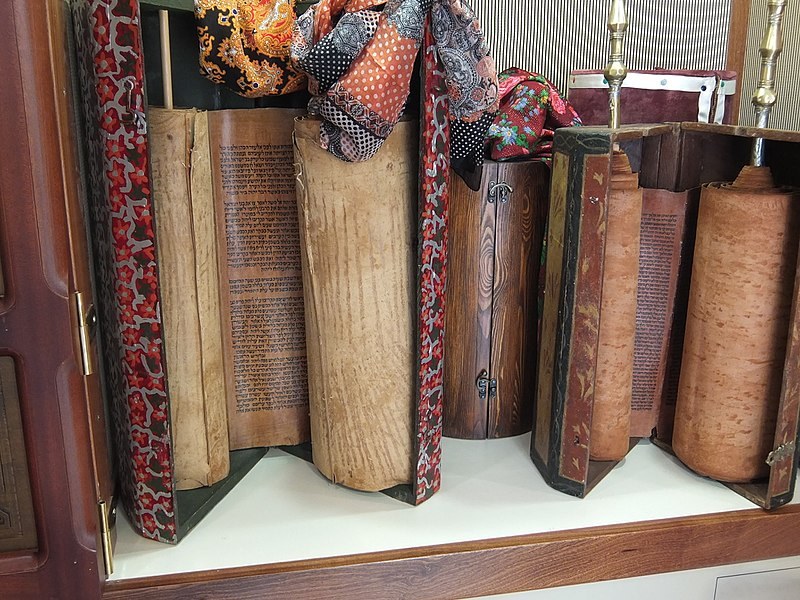
The International Council of Museum’s Red List for Yemen specifically included Torah scrolls as part of the cultural heritage Yemen seeks to take ownership of, which is deeply problematic. Unlike other endangered archeological items that CPAC is trying to protect, Torah scrolls are not a national cultural relic of any government – but are an integral, living element of Jewish heritage, and belong in the custody of Jewish communities. If this committee truly cared about protecting cultural property it would advocate a position of returning Yemeni Torah scrolls to Yemenite Jewish communities who are certainly the best caretakers of their living cultural property.
We ask you, how can a country that severely violated the human rights of its Jewish people, and is currently embroiled in famine and war, be entrusted to serve as responsible owners and custodians of Jewish cultural property? We find it abhorrent that a country whose antisemitic policies, and inability to protect its Jewish people, would now like to claim legal ownership over confiscated Jewish communal property. By signing an MOU with Yemen that does not include provisions that list Torah scrolls, and other Jewish items, to be excluded from import restriction lists, this committee is complicit in Yemen’s antisemitic crimes.
MOUs demand that the governments themselves show they are taking measures to preserve and protect the heritage in their own countries and Yemen should be asked to present an inventory of remaining Jewish moveable and non-movable patrimony and an account of what they are actively doing with respect to the care of synagogues, cemeteries and other sites and items of Jewish and Christian heritage. Sadly, we know the Yemeni government is complicit in the bombing and shelling of cultural sites, including museums, and has done nothing to preserve the remnants or memory of Jewish history from Yemen.
These MOUs claim to be about looting, but their broad scope and limited evidence of success suggests their impact is providing a legal vehicle to legitimize foreign confiscations and wrongful ownership claims. Proponents of import restrictions point to looting of museums, but such material is already subject to detention and seizure under the National Stolen Property Act. Furthermore, U.S. imports from Yemen indicate that the U.S. is not a destination for looted or stolen material. Legitimate efforts to curb looting in Yemen and other countries in the Middle East and North Africa are essential, but must be targeted to preserve archaeological resources, and not to disguise the brazen property confiscations of antisemitic governments.
We close by voicing our frustration that the Cultural Property Advisory Committee accelerated the timeline for action on Yemen’s MOU request, thus minimizing the opportunity for the Jewish community and others to oppose it. The call for public comment was made during the Jewish High Holidays, exhibiting insensitivity towards Jewish people and institutions who care deeply about this issue. We hope that your committee will take the concerns and requests of the Jewish community seriously.
Thank you,
Sarah Levin, Executive Director, JIMENA
Gina Bublil-Waldman, President, JIMENA
C.C.
Honorable Secretary of State, Mike Pompeo
Bureau of Education and Cultural Affairs Assistant Secretary, Marie Royce
House Foreign Affairs Committee Chairman, Eliot Engel
Senate Committee on Foreign Relations Chairman, Jim Risch
Commission for the Preservation of American Heritage Abroad Chairman, Paul Packer
Special Envoy to Monitor and Combat Anti-Semitism, Elan Carr
Tags
- Memorandums of Understanding (MOU)
- Cultural Heritage
- Yemen
- JIMENA's Initiatives
- Cultural Property
- Government
More Statements
Jewish Communal Request to Californa Governor to Adopt IHRA
To 40th Governor of California, Gavin Christopher Newsom. Jewish communities throughout our state are deeply affected during these challenging times of conflict and tragedy in Israel, and your unwavering support is pivotal for our collective sense of safety and wellbeing.
Endurance and Unity: Upholding Our Heritage in the Face of Continuing Threats
Dear Friends and Members of the Jimena Community, As Mizrahi and Sephardi Jews, we are all too familiar with attempts to erase our existence– from the Inquisition, to dhimmitude (the second-class status Jews held under Islamic rule for hundreds of years), to the mass expulsions of our communities in the mid-20th century– our history has, unfortunately, been colored by antisemitic threats and violence as an ethnic minority of the Middle East and North Africa. These efforts to erase our existence continue as we continue to bear witness to nearly daily direct attacks on Israel. As we watch the Islamic Republic of Iran and their proxies launch hundreds of rockets and drones, we understand these events are not isolated, but a continuation of the threat to Jewish life in the Middle East. Israel symbolizes not only the preservation of our rich and cherished history but also the triumph of reclaiming indigenous land. It stands as a beacon of strength and hope for all indigenous peoples of the MENA region who have faced subjugation and oppression under imperialism. We extend our hand in solidarity with the people of Iran, who know all too well the terror imposed by the Islamic Republic regime occupying their land. We understand that the regime’s actions do not reflect their own aspirations for freedom, liberty, and peace. This conflict is with the Islamic Republic, not the Iranian people, and we look forward to the day when they, along with us and the entire Middle East, are liberated from the regime’s despotism and chaos. In the face of threats by tyrannical rulers today, we stand steadfast in our identity as Jews, as Jews whose diasporic experience heralds from the Middle East and North Africa, and as Jews who support the existence of Jewish life in our ancestral homeland. Just as before, we will triumph over those who wish to destroy us, and we will continue to advocate for peaceful coexistence for all peoples in the region, so we may live our lives free from persecution, antisemitism, and hate. The People of Israel Live, today, tomorrow, and forever. Am Israel Chai. -The JIMENA team.
A Brief Guide to IHRA Definition of Antisemitism
An Introduction of the International Holocaust Remembrance Alliance Definition of Antisemitism